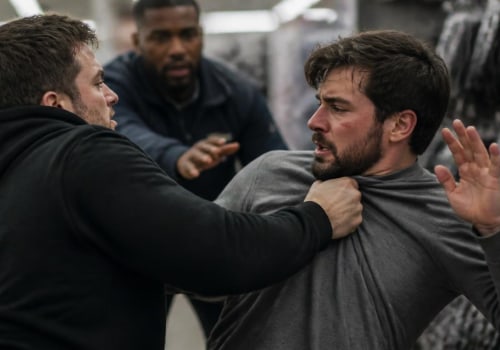
Once a lawyer starts asking questions after a bar fight or club shooting, the venue's response tends to follow a script. The person who hurt you was a customer, not an employee. Your group was arguing too. Maybe you even said something first. Whatever happened, the club insists, it was between patrons and none of its business.
Those arguments can sound convincing, especially to someone still recovering. But they do not answer the question that actually decides a negligent-security case.
The question that matters
The central issue is not who threw the first punch. It is whether the venue provided reasonable security and avoided over-serving. A bar that failed in those duties can share responsibility for an injury no matter who started the confrontation. Here is how the common defenses look under that lens.
"The attacker was another patron, not one of our people"
Most violence at bars is committed by customers. If that fact alone ended every claim, venues would never be accountable for security at all. Instead, a venue can answer for one guest hurting another if its precautions were not reasonable given the size of the crowd, the drinking it encouraged, and its own track record.
"Your friend started it" or "you started it"
Even if the victim or their companions were involved in the argument, the inquiry continues. Did staff see the dispute building and do nothing? Did a bouncer separate the groups, or let them stay in the same room for another hour? Did the bar keep serving the person who eventually pulled a knife? The venue's choices before and during the incident remain relevant.
Depending on the state, a victim's own conduct may affect the amount of compensation. That is a separate question from whether the venue is responsible at all, and it varies by jurisdiction.
"It happened too fast for anyone to stop"
Some attacks really are sudden. Many are not. Fights at bars often follow a long buildup of glares, shouting, shoving, and threats. Security staff trained to spot those signs can step in, eject an aggressor, or call police. A venue that had too few bouncers to notice, or whose staff ignored what they saw, cannot simply point to the final seconds of the incident.
"It happened outside, not in our club"
Venues frequently owe a duty in their parking areas and the space just beyond their doors. Attacks that occur in a club's lot or right outside its entrance can still support a claim if security there was inadequate. Many incidents involve people who were ejected or who left at closing, only to find each other again in the lot.
"We had security on duty"
Having some security is not the same as having enough. The question is whether staffing, training, weapons screening, and alcohol service were reasonable for that venue on that night. Two untrained door staff for a packed club with a history of fights may not meet that standard.
"The victim had been drinking too"
This argument comes up in nearly every nightlife case, and it makes sense why: almost everyone at a bar has had something to drink. But a customer enjoying a few drinks is exactly what the venue invited and profited from. The question remains whether the club kept the environment reasonably safe for the people it served. A venue cannot sell alcohol all night and then argue that its patrons were too intoxicated to deserve protection. Depending on the state, a victim's own condition may be weighed when damages are calculated, but that is very different from erasing the venue's responsibility altogether.
The evidence that cuts through excuses
Video footage, bar receipts, incident logs, prior police calls, and statements from staff and guests often show what really happened and how long it took to develop. That evidence can be lost within days, which is why early action matters.
Who may be responsible
Claims may reach the club's owner, the people managing it, and an outside security vendor. In many states, dram-shop laws may also add liability if the venue over-served the attacker.
What victims can recover
Compensation can include hospital and treatment costs, lost wages, scarring, and the emotional aftermath of being attacked, along with wrongful-death damages in fatal cases.
The Haggard Law Firm has opened nearly 500 negligent-security files. Gunfire at a weakly guarded Miami club-and-shopping property gave rise to one; the jury's $102.7 million award has never been surpassed in a U.S. negligent-security case. The verdict is reported as a gross recovery.
The firm charges nothing up front. Before taking a venue's story at face value, call (305) 446-5700 and get a second opinion, privately and free. To learn more, visit: https://crimevictim.attorney/negligent-security/nightclub-bar/
Attorney advertising. Nothing in this post replaces individual advice from counsel, and sending a message does not create representation. No previous outcome can guarantee yours.